
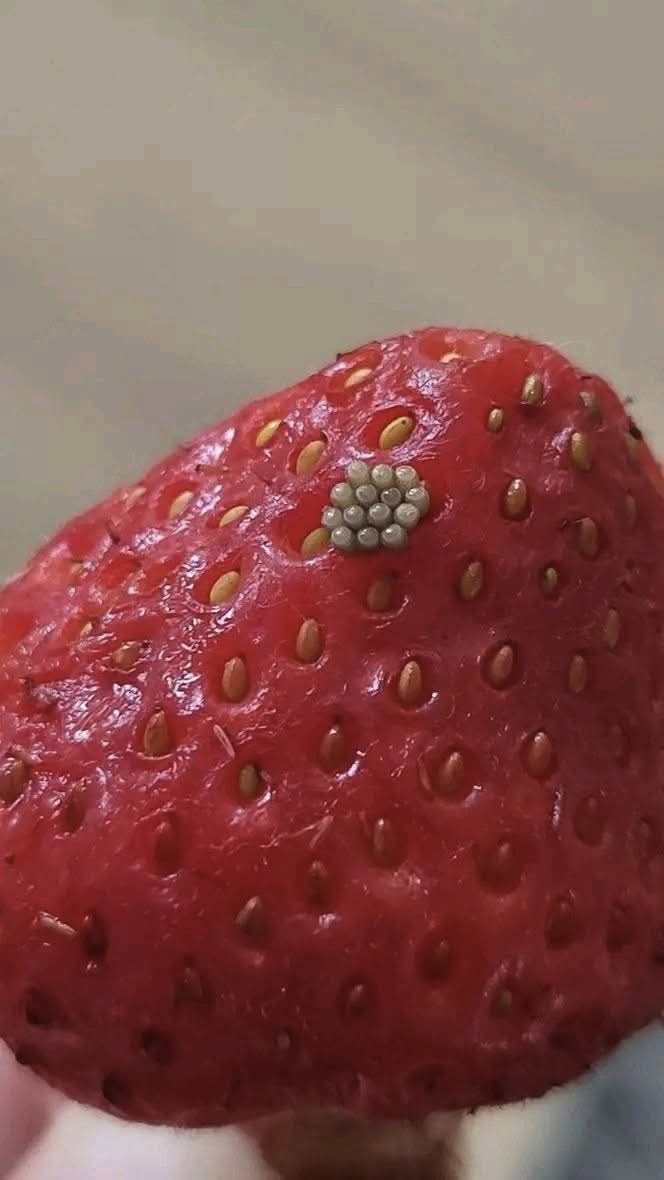
It is the ultimate “ignorance is bliss” moment in the kitchen. You start with a bowl of beautiful, vibrant strawberries, aiming for peak cleanliness, only to end up staring at a tiny, wriggling science experiment.
If you are currently hovering over your trash can with a bowl of berries, here is everything you need to know to make an informed (and hopefully less panicked) decision.
1. What Are Those “Wiggling Things”?
The tiny white threads you see are the larvae of the Spotted Wing Drosophila (SWD), a type of fruit fly. Unlike the common fruit fly that hovers around overripe bananas on your counter, the SWD lays its eggs inside fresh, ripening fruit while it is still on the vine or bush.
- The Lifecycle: The eggs hatch into tiny larvae (maggots) inside the fruit.
- The Invisibility: Because they are so small and translucent, they remain completely invisible to the naked eye during a normal rinse or while you’re eating.
- The Reveal: The salt water creates an osmotic pressure and an environment low in oxygen that irritates the larvae, forcing them to crawl out of the berry’s pores to breathe.
2. Is It Safe to Eat Them?
The short answer is yes. While the “ick factor” is through the roof, these larvae are technically harmless.
- No Pathogens: Unlike houseflies, these larvae do not carry diseases or parasites that infect humans.
- The “Secret” Ingredient: Most entomologists and food scientists will tell you that if you have ever eaten a pint of fresh raspberries or blackberries in your life, you have already eaten these larvae. You simply didn’t soak them in salt first, so you never knew they were there.
- Regulatory Standards: Even the FDA allows for a certain “defect level” in food. It is nearly impossible to grow soft-skinned fruit at a commercial scale that is 100% free of tiny insects.
3. Why the Salt Water Soak “Failed” You
Paradoxically, the salt water soak worked perfectly—it just gave you more information than you wanted.
Many people use vinegar or salt to “clean” their fruit. While this is effective at removing pesticides and drawing out bugs, it forces a visual confrontation with the reality of organic produce. If you had simply rinsed them under cold tap water, the larvae would have stayed inside, and you would have enjoyed your snack with a bit of extra, albeit accidental, protein.
4. Should You Throw Them Away?
This is a battle between food safety and psychology.
Keep them if:
- The fruit is firm: If the berries are still bright red, firm to the touch, and smell sweet, they are perfectly fine.
- You plan to cook them: If the idea of raw larvae is too much, use the berries for a cobbler, jam, or sauce. The heat of cooking (above 74°C or 165°F) sterilizes everything and changes the texture so they are undetectable.
- You’ve rinsed them well: After the salt soak, a vigorous rinse in fresh water will wash away most of the emerged larvae.
Toss them if:
- The fruit is mushy: If the berries are leaking juice, have soft spots, or smell slightly fermented, the larvae have likely been there long enough to compromise the structural integrity of the fruit.
- You can’t get past the mental hurdle: Food is meant to be enjoyed. If every bite is going to make you shudder, it’s okay to chalk this one up to a “learning experience” and start over.
5. How to Prevent This Next Time
If you want to avoid a repeat performance, follow these tips:
- The Cold Chain: Buy berries that are kept in a refrigerated case and put them in your fridge immediately. Cold temperatures slow down the development of any eggs or larvae.
- Inspect the Bottom: Check the bottom of the plastic clamshell for any signs of juice or “leaking.” Soft fruit is a magnet for more pests.
- The “Don’t Look” Method: If you want to avoid the trauma, skip the deep salt soak. A quick rinse under high-pressure cold water is sufficient for cleaning off surface dirt and most pesticides without forcing the internal residents to come out and say hello.
The Bottom Line
The presence of these tiny creatures isn’t a sign of “dirty” farming or poor hygiene; it’s a sign that your fruit grew in nature rather than a sterile lab. It’s a bit gross, yes—but it’s also a sign that the fruit hasn’t been doused in enough pesticides to kill every living thing in its vicinity.
What’s your move? Are you going to rinse and eat, or is it a “no” from you today?