
Introduction
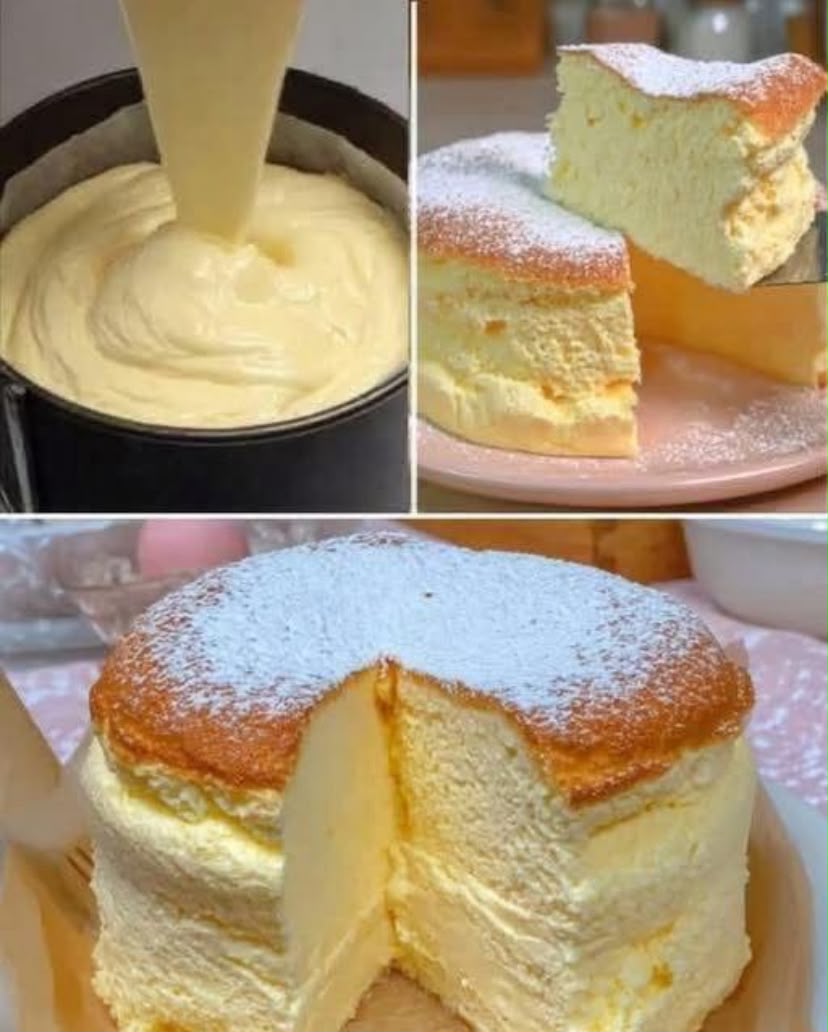
Delight in the cloud-like perfection of a Japanese Cotton Cheesecake. Often described as a heavenly cross between a classic creamy cheesecake and an airy soufflé, this famous treat features a signature jiggly texture, delicate sweetness, and melt-in-your-mouth lightness. By folding a glossy meringue into a rich cream cheese batter and baking it gently in a water bath, you achieve an unforgettable dessert that looks stunning and tastes like a dream.
Meta Description
Bake the ultimate Japanese Cotton Cheesecake at home! Follow this step-by-step recipe for an ultra-fluffy, jiggly, cloud-like soufflé cheesecake with tips for success.
Ingredients
- Cream Cheese: 8 oz (225g), softened at room temperature
- Unsalted Butter: 4 tablespoons (60g), softened
- Whole Milk: 7 tablespoons (105ml)
- Large Eggs: 6 eggs, separated (yolks and whites kept in separate clean bowls)
- Granulated Sugar: 3/4 cup (170g), divided into portions
- Cake Flour: 3/4 cup (105g), sifted
- Cornstarch: 2 1/2 tablespoons
- Lemon Juice: 1 1/2 tablespoons
- Vanilla Extract: 2 teaspoons
- Cream of Tartar: 1/4 teaspoon (or a few drops of lemon juice)
- Salt: A pinch (1/4 teaspoon)
Instructions (Step by Step)
Step 1: Prep the Pan and Water Bath
- Generously grease an 8-inch round springform or cake pan with butter, and line the bottom and sides with parchment paper.
- If using a springform pan, tightly wrap the exterior bottom and sides with a double layer of heavy-duty aluminum foil to prevent water from leaking inside.
- Preheat your oven to 320°F (160°C). Place a large roasting pan filled with boiling water (about 1 inch deep) on the bottom rack of the oven to create your water bath (bain-marie).
Step 2: Make the Cream Cheese Base
- In a heatproof bowl set over a pot of simmering water (or carefully in the microwave in short bursts), combine the softened cream cheese, butter, and milk.
- Whisk the mixture continuously until it is completely smooth, warm, and entirely free of lumps. Remove from heat.
- Whisk in the egg yolks one at a time, followed by the lemon juice, vanilla extract, and half of the total sugar.
- Sift the cake flour, cornstarch, and salt directly into the warm mixture. Whisk gently until smooth, then strain the batter through a fine-mesh sieve into a clean bowl to ensure absolute silkiness. Set aside.
Step 3: Whip the Meringue
- In a large, impeccably clean, grease-free mixing bowl, beat the egg whites using an electric mixer on medium speed until foamy.
- Add the cream of tartar.
- Gradually add the remaining half of the sugar bit by bit while continuing to whip.
- Increase the speed to medium-high and whip until the meringue forms soft-to-medium peaks—it should be glossy, voluminous, and hold a beak-like curl when the whisk is lifted. Do not over-whip into stiff, rigid peaks.
Step 4: Fold and Combine
- Take about one-third of the whipped meringue and fold it vigorously into the cream cheese batter using a spatula to lighten the consistency.
- Add the remaining meringue in two separate batches. Using a gentle cutting-and-folding motion (cutting down the middle, sweeping around the sides of the bowl, and folding over), incorporate the meringue carefully until just combined. Do not over-mix, or the trapped air will deflate.
Step 5: Bake Low and Slow
- Pour the light, airy batter into your prepared cake pan. Gently tap the pan on the counter a couple of times to release any large hidden air bubbles.
- Place the cake pan inside the preheated water bath in the oven.
- Bake at 320°F (160°C) for about 25 minutes until the top turns a light golden brown. Then, reduce the temperature down to 285°F (140°C) and bake for an additional 40 to 50 minutes until a skewer inserted into the center comes out clean.
Step 6: Cool Inside the Oven
- Turn off the oven, but do not open the door immediately. Leave the cheesecake inside with the door cracked slightly ajar for 15 to 20 minutes. This gradual cooling prevents the delicate soufflé structure from collapsing due to sudden thermal shock.
- Remove from the oven, run a spatula gently along the edges, and invert or flip onto a plate, then carefully peel off the parchment paper.
Service Suggestions
- Dusting: Generously dust the top with powdered sugar right before slicing for that classic bakery appearance.
- Glaze: Brush a thin layer of warm apricot jam mixed with a splash of hot water over the surface for a glossy, professional finish.
- Accompaniments: Serve plain or alongside a dollop of freshly whipped cream and fresh seasonal berries (such as strawberries or raspberries) to balance the delicate sweetness.
Storage Tips
- Refrigeration: Store any leftovers in an airtight container in the refrigerator for up to 3 days. Note that chilled cotton cheesecake becomes slightly denser, similar to a traditional chiffon cake, while remaining wonderfully moist.
- Serving Note: While it can be eaten cold, many enjoy bringing slices back to room temperature briefly before serving to recover a softer texture.
Frequently Asked Questions (FAQs)
Why did my Japanese cheesecake crack on top?
Cracks usually happen if the oven temperature is initially too high, causing the cake to rise too quickly. Always ensure you bake it using a water bath (bain-marie) and follow the stepped temperature reduction to maintain gentle, even heat.
Why did my cheesecake deflate completely?
Deflation can occur if the meringue was over-whipped or under-whipped, if the batter was over-mixed during the folding process, or if the cake experienced a sudden drop in temperature when removed from the oven too quickly. Letting it cool gradually inside the turned-off oven helps prevent this.
Can I use all-purpose flour instead of cake flour?
Cake flour has a lower protein content, which keeps the texture extremely light and cotton-soft. If you only have all-purpose flour, you can substitute it by replacing 2 tablespoons of all-purpose flour with 2 tablespoons of cornstarch per cup.
Conclusion
Baking a Japanese Cotton Cheesecake takes a little patience and care, but the reward is entirely worth the effort. With its jiggly bounce, delicate sweetness, and cloud-like texture, this masterpiece is guaranteed to impress family and friends at any gathering. Enjoy every melt-in-your-mouth bite!
Geoconecta. Com