
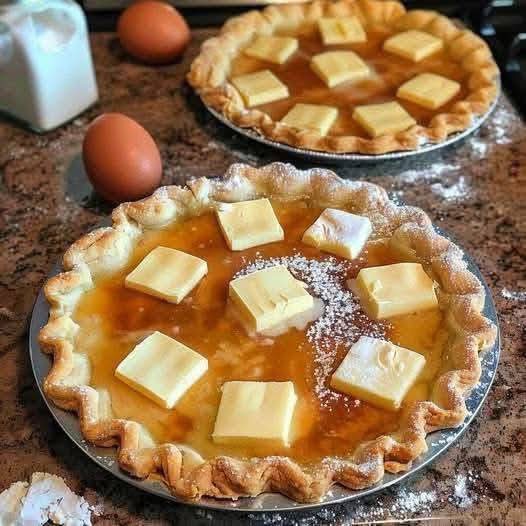
Depression Era Water Pie – A Sweet Slice of History
Depression Era Water Pie is a remarkable example of culinary ingenuity. Born during the Great Depression, this humble dessert demonstrates how limited ingredients—just water, sugar, flour, and a bit of butter—could be transformed into a surprisingly custardy, sweet, and comforting pie. Baking this pie is like taking a bite of history: simple, nostalgic, and heartwarming.
Why You’ll Love This Recipe
Despite its simplicity, the magic of baking turns watery ingredients into a luscious, lightly caramelized custard. It’s a testament to the creativity of home cooks during tough times and a fun, easy dessert that’s perfect for both beginners and history enthusiasts alike.
Ingredients (1 9-inch Pie)
- 1 unbaked 9-inch pie crust (homemade or store-bought)
- 1 ½ cups water
- 4 tablespoons all-purpose flour
- 1 cup granulated sugar
- 5 tablespoons butter, cut into small pats (do not mix in)
- 1 teaspoon vanilla extract
Step-by-Step Instructions
1. Prepare the Crust
- Preheat your oven to 400°F (200°C).
- Place the unbaked pie crust into a 9-inch pie plate.
- Optional: flute the edges for a decorative finish.
2. Make the Simple Filling
- In a medium bowl, whisk together the water, flour, and sugar until mostly smooth. The mixture will look cloudy—that’s normal.
- Stir in the vanilla extract.
3. Assemble the Pie
- Pour the water mixture directly into the unbaked pie shell. Don’t worry—it will look very thin.
- Carefully place the pats of butter evenly over the surface. Do not stir. The butter will melt on top during baking and form a slightly caramelized layer.
4. Bake to Transform
- Place the pie on a baking sheet to catch any drips.
- Bake at 400°F (200°C) for 30 minutes.
- Without opening the oven, reduce the temperature to 375°F (190°C) and continue baking for another 30 minutes.
5. Cool Completely
- The pie will be very jiggly at first. Let it cool to room temperature.
- Chill in the refrigerator for at least 2–4 hours, or preferably overnight. This allows the filling to set into a soft, custard-like consistency.
6. Serve
- Slice and enjoy! The texture is soft, syrupy, with a buttery, slightly crisp top.
Tips & Tricks for Success
- Chill is crucial: Cutting the pie before it has fully set will result in a runny mess.
- Butter magic: Don’t mix in the butter; it creates a delicious caramelized top layer.
- Consistency: The flour and sugar work together to thicken the water during baking, forming a simple custard.
Variations & Flavor Ideas
- Add a pinch of salt to balance the sweetness.
- Sprinkle a bit of nutmeg or cinnamon on top before baking for a warm flavor.
- Use brown sugar instead of white sugar for a deeper, caramel-like taste.
- Drizzle with honey or serve with a dollop of whipped cream for a modern twist.
Serving, Storage & Reheating
- Serve chilled or at room temperature.
- Store covered in the refrigerator for up to 3–4 days.
- Reheat slightly in the microwave for a warm custard effect if desired.
FAQ
Q: Can I make the pie without vanilla?
A: Yes, it’s optional, but vanilla adds depth and warmth to the flavor.
Q: Can I use a different crust?
A: Absolutely. A graham cracker crust or a pre-baked pastry shell also works.
Q: Can I make smaller pies?
A: Yes! Adjust baking time accordingly—smaller pies will need less time to set.
Conclusion
Depression Era Water Pie is more than just a dessert; it’s a story of resilience, simplicity, and ingenuity. With its soft, sweet custard and buttery, lightly caramelized top, it’s a comforting reminder that even the simplest ingredients can create something truly special. Bake it, share it, and taste a piece of history—you’ll be amazed at what water, sugar, and a bit of butter can become.